Showing posts with label conservation. Show all posts

April 22, 2016

'Tree'mendous fun facts: Earth Day 2016 - The importance of trees

The entire theme of Earth day 2016 revolves around the importance of trees. Most of the time we take trees for granted, and never quite realize the importance of trees in our lives.

Here are some valuable and important facts about trees:
  1. Trees Produce Oxygen – we can simply not live if there were no trees
  2. Trees play an essential role in environmental sustainability.
  3. It helps with the fight of climate change by absorbing carbon dioxide and other pollutants from the air.
  4. They prevent erosion and clean the water.
  5. Trees provide home to surrounding habitat, not to mention the nutritional value their fruits have to offer.

Some more facts...a little bit more on a lighter note.

6. It can be used as cover when being chased by a lion or elephant – usually lions do not climb trees. When out walking in big five game areas, the chances are good that you might run into one of the big 5. If you are surrounded by trees, then the best option would be to look for the closest tree and seek hiding. You might have some trouble when encountering a leopard.

7. When sleeping in the wilderness, there is no better roof for the night, than to sleep under a tree.

8. It serves as camouflage when faced with an elephant on foot – situational awareness is key during on foot guiding. Trees can become an important cover when faced with dangerous game.

9. An elephant keeps busy by pushing over some trees. According to the EcoLibrary “many ecologists believe that by frequently pushing over trees, elephants help keep savannas as open habitats, so that they do not grow up into more dense woodlands”
10. It creates shade for the lazy cat specie, the shade of a tree becomes a relieve during hot summer days
11. Trees make for beautiful photos
We must take it upon ourselves to look after our planet. Preserve the earth and we all will secure a green future for ourselves and our children. Let’s all celebrate Earth Day. Not only on 22 April, but every single day of our lives


Happy Earth day 2016!

May 29, 2015

Important Leadership lessons through Wilderness Trails


Most nature guides spend up to 7 hours a day in a 4x4 viewing wildlife with their guests, getting real close to large charismatic mega-fauna and some micro-fauna.

Their guests spend the rest of the safari time lavishing on decked accommodation, wining and dining and then depart in a light aircraft and view earth from above. The experience is above the ground and the guests as well as the guide’s feet, body and soul seldom touch and connect with our dear mother earth.

Nature’s intricacies, her spirit and soul are best understood from ground level via direct experiences with her. Living in her intertwined web of life, drinking her water, hearing her heart beat and realising that to live with nature/wildlife is not life threatening, but rather peaceful, real and timeless.

Great Plains Conservation decided to get some of their guides reconnected to nature and contracted EcoTraining in Botswana to set up a Wilderness Leadership Trail. The trail was 5 nights of absolute emersion into wilderness, carrying backpacks with only required food, no tents and no bottled water. The focus was “a leave no trace” philosophy. In addition was to provide the guides with leadership quality realisations eventuating to a philosophy of respect for everything and everyone as well as to enlighten them on conservation principles such as every action we have has an impact and knock on effect.

In the searing heat of February 2015, Great Plains guides and the trail leader, Clinton Phillips set off from Explorer camp into the vast 300 000 acre wilderness of the Selinda Spillway. The main plan was complete emersion into wilderness and to go with the flow that nature offers, and of course to arrive alive at Selinda Camp 6 days later.

No cell phones, watches and even toilet paper – we were venturing for a timeless experience away from modern day to day life interferences.

Little rain had fallen so drinkable water was hard to find in the first two days. The first and biggest hurdle to overcome was to drink murky and mud tasting water. This was tough for all especially in temperatures soaring over 42 degrees. We dug filtration holes and boiled water to purify and although it tasted terrible, it was safe. On day two there was a near boycott by some as they knew that we could simply call on the emergency radio and get fresh bottled water brought in. The option was given for those whom wanted, to do so but they would not be acknowledge to have completed a wilderness trail. After a long discussion all the guides decided to get over their mental block against drinking murky/dirty water and we continued down the dry river with the aim to find fresher water.

Leadership quality – there was a goal to achieve, a standard to stick to and along the way there will be tough times and stumbling blocks. It would be easy to give up, but leaders continue and get over their mental, ego and emotional block and reach the final goal, even when resources are lean.

Wilderness Conservation process – Water is life blood of the planet and if not conserved, earth and its organisms will perish.


The next process was sleeping on the ground at night time around a very small fire with lions, leopard, elephants, buffalo, hyena and hippos about? Typically most people feel the urge to burn a wasteful bon fire with roaring flames all night for protection.

In the Wilderness, we conserve fire wood as it is an essential part of the nutrient cycle. We construct a small fire, big enough for one pot/kettle and simply keep a flickering flame going all night. In fact it is not the fire that keeps wildlife away, but rather the continued movement of a human with a flashlight that keeps them away.

Each trailist took time slots of night duty, walking the perimeter of the camp and keeping the fire going. Many were scared, thinking that lions and other would surely stalk and attack us/or the night duty trailist.

Leadership quality – each person in the team has a role to play and others depend on them, in this case, the other trailists lives depended on the one to keep watch and wake the next person. Secondly, in life one should overcome ones fears in tough situations. By taking up a challenge, one soon realises that it was not as hard, or scary as initially anticipated. So don’t give up just because it seems difficult

Wilderness Conservation process – to conserve firewood, or any resource, even those that are renewable such as firewood. Only use what one needs and never be wasteful. We had our own method of time keeping without a watch – modern day life is far too rushed and we get lost in time keeping, forgetting to slow down and look and listen to our surroundings.

The second days walk to fresher water down river was very tough. During rest times, trailists slowly sipped their murky water and toward the end, dehydration was sure to set in. Some wanted to strive on, but others were taking strain. The bonding of the team had begun and this resulted in a group decision to slow down for those weakening, offer assistance to carry some of their load and rest where required.

Leadership quality – never leave others behind and if they struggle, offer assistance. Each person in the team is important so respect them and their possible weakness and focus on their strengths. Grow together! Encourage each members input to the team.

After trailing through some real hard core wilderness habitat, tip toeing around elephant herds in the heat of the day, we arrived at the permanent water of the spillway. We replenished our thirst and took a good swim. This water was not “so called fresh” as it was murky, had many hippo and elephant activity in it, but the fact that it was not muddy slight flow, made it easier for the trailist to drink.


A well needed rest was taken and off we ventured, down the spillway to our seconds night’s camp. Leadership quality = team members cannot continue on the mission unless their energy levels are replenished and ready for the goal ahead. Never push a team member to the point of exhaustion and then expect 100% effort of performance. 

We all need a break at some point. But, one team member cannot impact negatively on the rest of the team. All should go the extra mile for an agreed goal – so give a little extra! The team should support a tired member. “Help those around you, offer support as one day you may need some support”.

The rest of the trail was smoother sailing largely based on proximity of fresher water. We now had time to focus on walking skills, stories, timelessness, wildlife viewing and wilderness ethic. The bond between members was set as all were now more comfortable in the “unknown, scary and supposed dangerous environment”. It was time to absorb our surroundings.

The Leave no trace philosophy
The message in the process does not come from words, facts and lectures, but rather by thinking of
the outcome of one’s actions and then doing. Be subtle, soft and light in footprint so that what you leave behind does not negatively impact the environment, or at least, impacts it in the least.

Secondly and most importantly in this message is the psychological impact of one’s actions on others. In other words, by saying “I do not want to impact the environment negatively by driving through pristine and sensitive waterlogged floodplains has little meaning. What has far more meaning is ones actions!
Example; when you see a pride of lions walking through the flooded plain and your guests want to get a photograph, your actions will determine the type of guide you are in their eyes and minds – If you comment to guests, stating that by driving through the flooded plain is not sensitive, so I would rather not. But, as a solution, I will try to find a more sensitive route to the lions by driving on dry land, getting as close as sensible, then you have kept their interest in mind without negatively impacting on the environment = Leave no or as little negative trace as possible.

Wilderness Conservation process – The central idea behind Wilderness Camping revolves around taking the bare essentials into the wilderness and departing with as little impact as possible, utilizing from the wilds, only what is required and thinking before acting, projecting and comparing the negative and positive impacts of one’s actions and only then making a decision.

The hope in the above philosophy is that guides and people will take this message to heart and implement it in their daily lives, jobs, home living and more.

Fire making, its management and cleaning up the camp site?


Most guides/camp staff and managers simply collect lots of firewood, make a huge bon fire and in the morning dig a big hole and bury the ash. What goes into the fire at night is never thought of in terms of impact – food, plastic, bits of paper with tinfoil etc. Once this waste is buried, it contains odours of whatever was put in and within a few days, scavenging animals have dug it up and exposed not only the unsightly ash pile, but all the debris inside.

Our ethical, conserving policy is:
We made small fires big enough for a pot = had a strict wood burning policy, so that we did not leave huge burnt logs lying around and we had a very strict policy of what goes into the fire as waste such as:

  • Tea bags are dried on the edge of the fire and then burnt, any paper containing plastic of tinfoil, was put into rubbish bags which we carried with us and out of the wilderness, no wet food put in fire – finish the food and do not throw away.
  • We dug a small hole in which we could drain water only from cooked rice, pasta etc. which was covered up on camp break down.
  • The fire had a sand base so that we could properly dispose of all ash during camp break down. The process is to cover the small fire with sand, add water slowly and mix it up like cement, ensuring all coals were extinguished. This muddy cement like mixture of ash and sand is then spread widely in the bush so as to leave no sign of a fire ever being there, or spread the ash in the rivers where is it quickly disappears.
  • Spreading ash and sand sensitively
  • The fire place is then spread over with dry sand, leaves, twigs or elephant dung.

Lastly, before departing camp, a thorough check is carried out by all to ensure the site is clean of modern day human life = leave on footprints.

This process almost becomes a religious, spiritual process with the message being drummed into trailists minds with the hope they carry the philosophy of respect for the environment, not only in the wildlife areas, but also back home to their daily lives, family and friends.

The KGOTLA system – or introduced as the INDABA system 
As per Wilderness Leadership ethic, at key times, a Kgtola was held. This involves sitting in a tight circle and introducing the Kgotla Stick, or talking stick. The central idea is that the person holding the stick is respected in what they wish to say. Further, in respect to the person giving their message is that others should respectfully listen.

The Key for Kgotla/INDABA is that there is no right or wrong statement, there is no debate, but rather to realise that every person and organism has a message that should be listened to, and listened to with respect. To show respect, one must listen with intent, properly and without distraction.

Leadership quality - The intention of this system is to allow people to take courage in who they are and what they believe in. Further to this, is the hope that trailists leave with a more humble approach to life in that as humans, our egos often get the better of us to a point where we have blinker vision, focusing only on what we as individuals think is best for ourselves and our progress, rather than realising that we live together with one another and mother earth. We must listen to our surroundings and take everyone’s message into consideration before acting.

Wilderness Philosophy/Conservation – Wilderness is best experienced when listened to, then understood and therefore respected.

KGOTLA –The Talking Stick
Lastly, the KGOTLA/ talking stick methodology allows different people, with different backgrounds,
culture, race, colour, opinions, knowledge and stories to feel free and confident about who and what
they are.

In the remaining days of the trail we all settled in quite comfortably to our home in nature. The
process of living became easy and many trailists took solitude time to reflect on whatever they
reflected on.

Personal journeys were accomplished, many overcame their fears of the Wilderness and memories of this trail will stay in the minds of the participants for the rest of their lives. Strong bonds were made between the trailists and I’m sure strong bonds were made with trailists and Mother Earth.

History was made and all in a pioneering spirit – but Key to all was and is respect for all.

As the trail leader, a wilderness trail guide and from EcoTraining, I cannot thank each guide enough for their valuable input and participation.

EcoTraining and I would like to thank Wilderness Leadership School for the use of their Trail Equipment for this trail. Further, I would like to thank Wilderness Leadership School for the enlightenment given to me my mind and soul at a very late stage of my guiding career.

I look forward to the next trail...

Blogpost by Clinton Phillips
Photos by Lets Kamogelo

October 2, 2014

Migratory birds - Home sweet home

For the past week or so, the temperatures in the Lowveld have started to soar.  The days have become longer and evening attire has changed from beanies and heavy jackets, to shorts and perhaps only a light fleece.  Migratory birds have also started to return in their numbers and we have seen plenty of Wahlberg’s Eagles and even a rare sighting of a thick-billed cuckoo in recent days!  Spring has most definitely arrived.

The avian activity around camp has also changed with various species of bird being seen on a daily basis flitting from tree to tree gathering nesting material as they begin to prepare for the breeding season.  Many males have lost their drab ‘eclipse plumage’ and developed their more striking feathers in an attempt to woo potential mates.  One such example is our resident red-headed weaver who has been diligently constructing his new nursery as his newly acquired mate looks on with a critical eye.  Should his handy-work not be to her satisfaction he will have start from scratch…  (One of many parallels with our own species!!)

For the past week, he has been making regular forays to the tree outside the office and I have had a few opportunities to photograph his return to his fortress that is now taking shape.  Whilst by no means the most beautiful architect of the weaver family, the red-headed weaver’s construction skills are still impressive.  In less than a week he has fashioned a complete ball suspended from the tip of the branch with only the entrance tunnel still to go.  The red headed weaver is the only species in southern Africa that uses twigs as opposed to grass to create his abode and is thus an easy nest to identify in the field.  They also do not build over water as with many species and their rather untidy masterpieces are becoming commonplace, adorning a variety of trees, like Christmas decorations, in the local area.

It is a miracle that an animal with a brain not much bigger than the size of a pea is able to manufacture such a complex construction.  Even more so when one considers that they have not been taught the skills necessary to do so.  It is a perfect example of nature over nurture and yet another indicator of the complexity of the natural world.  As I sit in my office writing this, I can see his nest swaying in the light summer breeze and I can already feel myself willing him and his mate on to successfully produce, and care for, the next generation of these supreme avian architects!


Writer and photographer: Ben Coley

June 17, 2014

EcoTraining Selati - Sable Breeding Camp Trip

The students at Selati were given the opportunity to visit the sable breeding farm in the far north of the reserve.  The diversity of the course offered by EcoTraining is such that students are exposed to not only fascinating facts about the bush, but also how conservation management fits into the equation.  Sable are one of the rarest antelope to be found in southern Africa and their value is such that entire reserves are able to exist through their sales and breeding.  Selati is one of those areas and the 33,000 hectares are fully funded, not by commercial lodges, but exclusively through the funds generated by Sable breeding project.

We were met by the farm manager Hannes, a former guide who started with almost no knowledge about breeding Sable, but after 7 years of hard work is now one of the pioneers into Sable breeding and is the man responsible for generating the funds that allow Selati to prosper.  Hannes’ enthusiasm and love of sable is evident and he gave the students a detailed lesson in how they are bred and generate the income through the programme, as well as insightful information about the behaviour of this stunning animal.  The students were fascinated by the process and Hannes was subjected to a barrage of questions about the various processes!
After a couple of hours, we stopped for a packed breakfast in the bush before heading back to camp.  On the way, we stopped off at the largest baobab tree on the Selati reserve and received a quick lesson on this magnificent tree.  Although not as big as some specimens, for many it was their first time to see the fabled behemoth and all delighted in the experience.  The road back to camp was peppered with elephant damage and much energy was expended as the students discovered the delights of working in an area that comes complete with its own set of landscape gardeners!  Quite why the elephants seem to revel in felling trees across roads was beyond us, but we all enjoyed a bit of physical labour after to get the blood pumping!


February 7, 2014

THROUGH THE BUSH TELEGRAPH: Look before you leap – Selati


If there’s one guarantee in nature, it is that the unexpected is sure to happen, as sure as the sun rises in the east and sets in the west. As this update from Christine Jutz from our wilderness camp in the Selati Game Reserve clearly indicates:

“Instructor Mark Gunn would always tell us that part of guiding and conservation is to clear the road of any overhanging branches, as this would prevent the creation of new roads and so disturbing the natural environment. So every once in a while, he would stop the vehicle and say “Tracker, take the panga and help me to get this branch.”

Then of course the following happened on one of the drives… Our ‘tracker’, fellow student JJ, jumped off his seat, grabbed the panga, and as he was walking to the sickle bush, everybody on the vehicle started yelling “Lion, lion!”

Less than five meters from JJ, two lionesses and a young male rose from the vegetation where they were sleeping before we attempted to clear the sickle bush.


JJ levitated back to the vehicle in a single bound, and the lesson was learnt: Look before you leap!”

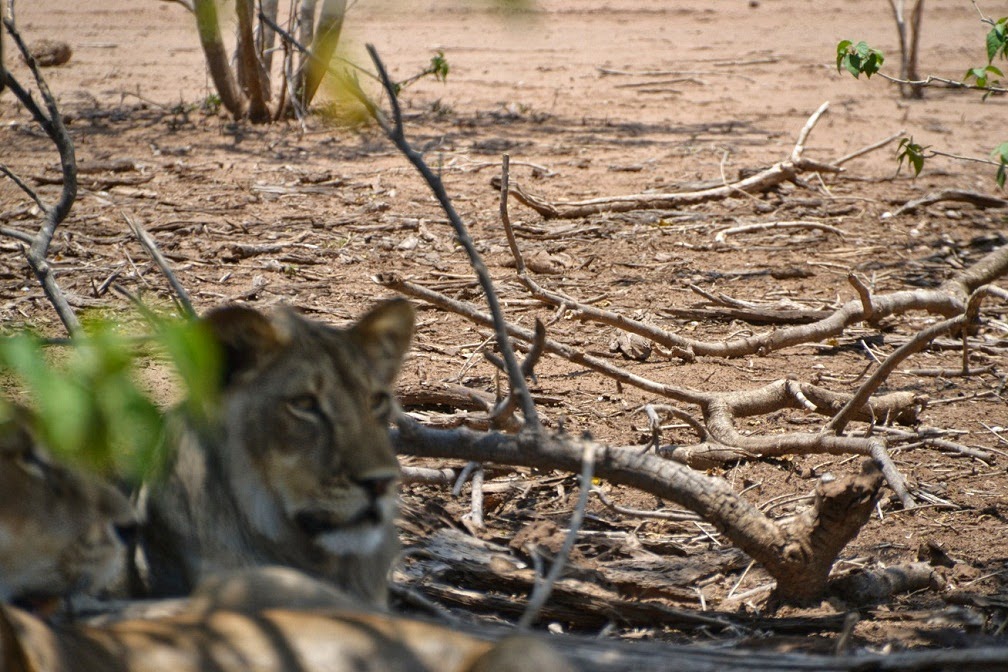
NOTE: The picture is not of the lions in this story, it is however of the Selati lions. 

October 17, 2013

28 DAY SAFARI GUIDE COURSE: PUT THIS ONE IN YOUR CHRISTMAS STOCKING – MASHATU, KARONGWE, SELATI


So many things to do, so little time… Therefore the EcoTraining 28 Day Safari Guide course from 26 November-23 December is just the right way to make 2013 a year to remember.

From three of our wilderness camps – Mashatu (Botswana), Karongwe, Selati (South Africa) – you will experience an unrivalled bush holiday whilst learning about the environment in a unique and exciting way. It is for those that are passionate about nature, who would like a more in-depth experience and understanding of it. The knowledge you gain on this course will take your safaris and bush holidays to the next level and give them a whole new meaning.

You will also get to immerse yourself in the unique animal and plant life of three different reserves on this specific course – each with its own sense of allure.

And experiences like this, described by a course participant, won’t be out of the ordinary…


“We were about to sit down for dinner when we heard a lion roaring just outside of camp. We hopped into the Land Rover… It was a lone lioness and she called several more times while walking past the camp, attracting the attention of several spotted hyenas. 

Continuing a feud as old as time, three hyenas came looking for her and found her, while five more circled around behind.  She held her ground until the hyenas attacked, and then she let out a ferocious snarl and swiped at one of them before running for the nearest nyala tree. The hyenas followed in pursuit and stalked around the tree. 

The next morning, tracks showed that two male lions eventually joined the fray, probably dispersing the hyenas, allowing the lioness to come down.”

Here’s a diary snippet from another fortunate participant to whet the appetite…


“Lions were spotted just across camp! We followed the tracks and found five lions after one hour of walking. What a great experience! The cubs were playing around but at the same time also very alert. The female started growling at us, swishing her tail. Eventually they all started growling at us. We had an awesome sighting and had to back out because of the alertness, growls and warning signs. We continued the walk away from them. And then, to top it all, we also saw a bat eared fox! Not to mention the many kudu and impala in the riverbed and the vultures in the sky. It was a lovely walk in the cool breeze.”

And if that wasn’t enough…

“The sun was setting rapidly, and as darkness descended the radio call came in: ‘There are lions in camp! They are close to Tent 13!’ We raced off back to camp after I instructed all the guys in camp to gather in the main lecture area or to stay in their tents. As we approached the camp, we decided to go and see exactly where the lions were, and how many there were so that we could make a judgement call as to what the next plan of action would be.


As we came around the corner, there they were; 3 of them, sprawled out in the middle of the pathway leading from the instructor’s tent to tent 13. It was a lioness and her sub-adult nephew and niece. They were quite relaxed before the young male got up and walked to tent 12. As he disappeared out of view we kept on looking at the older lioness who was very relaxed with in our company.”

So come on, what are you waiting for? Get in touch and book your place – 26 November-23 December – Mashatu, Karongwe, Selati – Email enquiries@ecotraining.co.za.


(Thank you Agnes van der Heijde for the photos!)

August 27, 2013

ECOTRAINING: PASSIONATE ABOUT CONSERVATION

From humble beginnings way back in 1993, when a handful of passionate individuals saw the opportunity to provide the tourism industry with qualified nature-guides, to the leader in this field today.

This is the story of EcoTraining.

For the past 20 years, thousands of people with a deep love for nature, an appreciation of all things wild and wonderful and a passion for conservation, have attended our courses in wilderness camps across Africa.  And armed with this knowledge, they have gone on to make a difference and spread the message of reconnecting with nature in a meaningful way.

Michael Clark, who trained with EcoTraining more than 10 years ago, is currently in Nepal, training up young Nepali naturalists. 

Says Michael:

“The variety of subjects is incredibly diverse and comprehensive, and the practical element provides you with experiences that are hard to put into words. Anyone who is serious about a career in eco-tourism or simply wants a sabbatical from work, the experiences you can have on a course can lead to a whole new way of life, and provide you with memories to truly cherish.”

Like Marc Lindsay Rea, who says he’s now living the dream, thanks in part to EcoTraining who has put him in a very privilege position indeed, as a fully qualified field guide leading people into the wilderness and onto memory-making adventures.


“I have such a thirst for acquiring knowledge about wildlife and nature from around the world and I am lucky to have the privilege to guide guests through these exciting places. I thank and appreciate everybody and every company that has put in many long hours to help get me to the position I am at now. Thank you!”

Yes, we are essentially a field guide training company, training guides for the industry. But with shorter courses and excursions on birding, tracking, photography and bush survival, and from anything between four and 28 days, we are also catering to the tourist with a conscience.

Today’s tourist is a thinking traveler who wants to have fun while gaining a better understanding of the natural world. And this is where a company like EcoTraining is stepping in and creating an experience with a difference.


Like Richard Schmid from Switzerland who was born in Mombasa and spent the first seven years of his life in Kenya. He went back to the country of his birth to take part in a 28 Day Field Guide course in the Lewa Wildlife Conservancy.

For Richard there’s no other way to travel.

“I travel like this all the time, to go out and actually do something, on a course like this to be directly and actively involved in something. I now know so much more, my base of knowledge has broadened considerably and I’m not regretting it for one moment. We have an ecological responsibility and I think people are becoming more and more aware of it all the time.”

Through the years the EcoTraining qualification have become the trusted nature-guide training standard in the industry, giving people from all walks of life and from all over the globe the opportunity to become one with nature. We have trained all across the African continent and also in many other parts of the world.


And our wilderness camps in South Africa (Makuleke, Selati, Karongwe), Botswana (Mashatu) and Kenya (Lewa), is where it is all happening. It’s in these simple unfenced bush camps in the middle of these great wilderness areas participants truly get to experience what it is like to live in wild places. Under the guidance of experienced instructors, countless hours are spend walking or driving in the bush, and an understanding of our place in the natural world is cultivated.

Africa indeed just has its way with people. The continent’s wild and wonderful places lure people from all over the globe, to come and explore and then to return wherever they are from with vivid memories to last a life time.

You will get all this, and so much more, on an EcoTraining course.


But don’t just take our word for it. From the horse’s mouth, or in this case, Nick Baker, a former professional field guide course participant:

“The beauty of this course is the extended time one spends out there, nothing is rushed and every day one learns something new, building a quite awesome knowledge base… I miss it today and will miss it every day that I am not there. The experience is total and is built of a complicated set of components, animals, birds, trees, plants, insects, soil, water, weather, stars, sights, sounds, smells, magic…  The bush does funny things to your head. It has got inside mine…”


Candice Wagener McGuire echoes these sentiments:


“I guide because I like sharing my passion with those around me, I love seeing how the bush inspires every single being. My day is made when I see how people brighten up when they spend their holiday in the bush, how the smallest things put a smile on their faces. When I guide, I feel like I’m making a small difference to keep Africa alive in everyone’s hearts.”

August 21, 2013

PROFESSIONAL FIELD GUIDE COURSE: Testimony that you’ll have the time of your life!


The time is NOW to make that jump into an adventure of epic proportions. EcoTraining’s professional field guide course will change your life and put you on a path sure to be more exciting than you can ever imagine.

The next one is about to start, in September, and for a limited period of time being offered at a special rate. Email enquiries@ecotraining.co.za and make sure that you are among the lucky ones!

Like Marc Lindsay Rea, who says he’s now living the dream, thanks in part to EcoTraining who has put him in a very privilege position indeed.

Here is his story, enjoy, and be prepared to book your place afterwards…

“When I was 11 my father went on a business trip to Phinda Private game reserve and returned home with a brochure of CC Africa. I was amazed by the images… From that day on I knew I wanted to work in the bush and become a ranger. 

So it was a natural choice for me to do a game ranging and lodge management diploma after school, which I passed with an overall distinction. During my diploma course I did two EcoTraining courses, at Selati and Makuleke. This was the first time I had actually spent a solid amount of time in the bush doing training. It was brilliant.

After my course and practical experiences at EcoTraining, I approached AndBeyond and passed their selection phase and relevant training and was offered a job at Madikwe Safari Lodge. Since starting my guiding career in early in 2006, I steadily climbed the ranks becoming a senior ranger, mentor, assistant head ranger and was then appointed as head ranger in October 2008.

For most of 2011 I spent my time working in Namibia at Sossusvlei Desert Lodge. I also spent time working in Botswana at Nxabega and Sandibe lodge in the Okavango delta for AndBeyond.

In 2012 whilst working as a ranger and a specialist guide at Phinda Game Reserve I was nominated by my peers to compete in the Safari Guide of the year 2012. I made it into the top eight rangers in the country and in the finals I won two out of the six categories we were all being assessed on.

I have completed my FGASA Level 3 and have also got my Level 2 trackers qualification. In addition I’ve got a full trails guide walking qualification with hundreds of hours of walking experience and dangerous game encounters on foot. This is one of my favourite ways of experiencing the bush and encourage all my guests to come tracking big game on foot with me.

After the competition Africa Direct noticed me and my skills in the bush and offered me a position to become a private, specialist guide in their company. I now get to travel all over Africa with my guests and am at the pinnacle of my guiding career.

I thank and appreciate everybody and every company that has put in many long hours to help get me to the position I am at now. Thank you!

In addition to the bush I have a massive passion for wildlife photography. I have been placed first and third in two international competitions: Africa Geographic / Canon Field Guides Competition and Wildside Nikon All Africa Competition respectively.

I have travelled to a large number of countries around the globe but nothing compares to the excitement of travelling Africa. I am very serious birder and am called a twitcher by many of my friends. Because of my love for birding I have explored the remotest parts of Mozambique, Zimbabwe, Botswana and Namibia looking for all the special rarities.

In 2009 I founded a small non-profit organisation with the help of my work colleagues and some guests to support the Matetsi Community along the Zambezi River in Zimbabwe. We helped 150 people for 3 years supplying them with vegetable seeds, clothing, toiletries and fishing equipment to try make living a little easier over that difficult time in the country.

I have such a thirst for acquiring knowledge about wildlife and nature from around the world and I am lucky to have the privilege to guide guests through these exciting places.”


(Thanks for sharing Marc!) 

March 14, 2013

TAKING HANDS – CONSERVATION EDUCATION ACROSS THE GLOBE


A model for the Middle East. With some help from Africa. Taking conservation education across borders, a handful of different role players are adhering to the notion that in nature all is connected in some way, shape or form.

For the last three years EcoTraining, a leader in field guide training for 20 years in Africa, the Royal Society for the Conservation of Nature in Jordan and Tetra Tech, a consultancy firm, have been working together to transform the conservation and guiding sectors in Jordan.

An opportunity like this, for conservation bodies and training facilities across the globe to strike up partnerships, recently resulted in the graduation of four young Jordanians after they successfully completed a yearlong professional field guide course at EcoTraining’s wilderness camps across South Africa.

From an extensive internet and social media campaign that attracted hundreds of applicants, Abdullah Abu’Ramman, Osama Alsomadi, Osama Alrabay’ah and Nadia Alalul were in the end the fortunate ones. With the knowledge acquired during the last year, armed with and fully certified under EcoTraining and South Africa’s guide qualification system (FGASA), these four are now task to go back to Jordan where they will practice as guides and trainers in their own right. In the process they will not only be transforming the guiding experience in Jordan, but also serve as the foundation for the next generation of highly qualified Jordanian nature guides.

(From left) Tall Osama, Short Osama, Abdullah, Nadia
The next phases of the program will involve the setting up of a training academy. This academy, currently being built in Aljoun about 80km outside of the Jordanian capital, will serve the urgent and vital need for building capacity in the whole of the Middle East to protect and manage its environmental resources in the face of ever increasing development pressure. Here expertise and skills would be developed at vocational level and a resource base for the region would be established.

Upon their graduation, Chris Johnson, the program director for new projects for RSCN and mentor to the foursome, said they feel strongly that nature be one of the drivers of economic opportunities not only in Jordan, but the whole of the Middle East.

“We’ve come to realize that the need for a project of this magnitude is far greater than we initially anticipated. The need for capacity building in Jordan and the whole region has snow-balled and we have just started on the path to grow this into something big and truly meaningful and longstanding.”

Ahmed Hassan, a director from Tetra Tech, said he knew EcoTraining would be the best fit for the project.

“I’ve known EcoTraining from previous visits to South Africa and realized that what we wanted to achieve in the long run, could not start on a better footing than using their method of training as a model. But hard work still remains, it is indeed only step one of a long journey.”

(From left) Short Osama, Tall Osama, Nadia, Anton Lategan, Ahmed Hassan, Chris Johnson, Abdullah

During their yearlong course, the two Osamas, Abdullah and Nadia were exposed to the diverse ecological and geological terrains, landscapes, wildlife species and so much more in places like Makuleke, Karongwe and Selati where EcoTraining has its wilderness camps.  For the first six months, the company’s highly experienced instructors shared and imparted their wealth of knowledge on a variety of subjects – geology, astronomy, ecology, botany, taxonomy, animal behavior and conservation management, to name but a few. Then they got a taste of what life as a field guide really is like with their placement at a lodge.

Apart from being amazed at the amount of knowledge they accumulated in the time since taking those first tentative steps a year ago, Nadia said she is fully aware of the huge responsibility now resting on their shoulders, to transform and help shape the guiding industry in a different part of the world.

Nadia
“We have had the privilege of living in an environment that few people nowadays get to experience, living among wild animals in their natural environment, and being able to study and observe from only a short distance away.

All in all this has been an amazing adventure and I had the time of my life! Make no mistake, it has been grueling and the amount of information that I have absorbed has been enormous but I have learnt so much and everything has been interesting. I can recognize hundreds of bird calls, achieved a track-and-sign level 1, can tell the difference between a black and white rhino by looking at their dung, which way a leopard is moving and whether it’s a female or male by looking at its tracks in the dirt, and I know which tree can ease my pain and which one could kill me.

But most importantly, I have an appreciation and deep respect for all creatures like I have never had before. I wouldn’t have realized all this if it weren’t for those special people we have had the honor and great privilege to meet along the way. The dedication and knowledge of these highly experienced instructors in promoting conservation and helping to educate others on why our environment and everything in it is so important, has made a big impression.”

Tall Osama
‘Tall’ Osama said his dream to travel and explore the world came true when the RSCN awarded him one of the coveted spots in the yearlong professional field guide course with EcoTraining.

“I am not sure if it was normal for a little child of four years old to answer the classical question of what you do you want to be when you grow up with “Emperor” but this was my answer. I couldn’t even pronounce it right but since then, I learned to dream big. And now I am prepared to go back to Jordan and teach this art to others. In the end I would thank my beloved parents, brother and sisters, the RSCN, Chris Johnson and all the people that build up my story with pieces from here and then.”
Short Osama

Every single person that he met in the last year, has marked his life forever, is how ‘Short’ Osama reflected on his time with EcoTraining.

“And I have to also give thanks to every impala. From the very first one that we saw and didn’t even know what it was. We were just amazed by its beauty, taking pictures and posing with it. To the very last one that we took for granted and thought to ourselves it’s just another impala.”

The journey of a thousand miles begins with one small step, and Abdullah may have summed it up best when he said that their lives have now been changed forever, and for the better.

Abdullah

“It has been an amazing year spent with great people with an absolute love and passion for nature and all that happens out in the wild. I can honestly say that I never could have imagined an experience like this. I am now very much looking forward to the rest of the journey and sharing what I have learned.”