Showing posts with label Selati. Show all posts

June 17, 2014

EcoTraining Selati - Sable Breeding Camp Trip

The students at Selati were given the opportunity to visit the sable breeding farm in the far north of the reserve.  The diversity of the course offered by EcoTraining is such that students are exposed to not only fascinating facts about the bush, but also how conservation management fits into the equation.  Sable are one of the rarest antelope to be found in southern Africa and their value is such that entire reserves are able to exist through their sales and breeding.  Selati is one of those areas and the 33,000 hectares are fully funded, not by commercial lodges, but exclusively through the funds generated by Sable breeding project.

We were met by the farm manager Hannes, a former guide who started with almost no knowledge about breeding Sable, but after 7 years of hard work is now one of the pioneers into Sable breeding and is the man responsible for generating the funds that allow Selati to prosper.  Hannes’ enthusiasm and love of sable is evident and he gave the students a detailed lesson in how they are bred and generate the income through the programme, as well as insightful information about the behaviour of this stunning animal.  The students were fascinated by the process and Hannes was subjected to a barrage of questions about the various processes!
After a couple of hours, we stopped for a packed breakfast in the bush before heading back to camp.  On the way, we stopped off at the largest baobab tree on the Selati reserve and received a quick lesson on this magnificent tree.  Although not as big as some specimens, for many it was their first time to see the fabled behemoth and all delighted in the experience.  The road back to camp was peppered with elephant damage and much energy was expended as the students discovered the delights of working in an area that comes complete with its own set of landscape gardeners!  Quite why the elephants seem to revel in felling trees across roads was beyond us, but we all enjoyed a bit of physical labour after to get the blood pumping!


March 3, 2014

Live the Mashatu Magic - March Newsletter


“Nature is not a place to visit. It is home.” (Gary Snyder)

2014 certainly started off with a bang at EcoTraining's wilderness camps across Southern Africa. The participants on various courses have already experienced a great deal and more is sure to follow! Come quench your thirst for knowledge and take your pick out of an array of courses. Let’s make this year one to remember!

Upcoming Courses
There are still some spaces left on the courses below in the next couple of months. Experience things and gather knowledge that will blow you away:

Professional Field Guide
31 May 2014 – 15 April 2015 (All camps)
FGASA Field Guide Level 1
09 April - 02 June 2014 (Selati, Karongwe)
Wilderness Trails Skills
31 May - 05 June (Makuleke) 


Mashatu (Botswana): Why would you choose our Mashatu wilderness camp for your EcoTraining experience?

Perhaps for the unique beauty and unrivalled animal sightings.

EcoTraining’s wilderness camp in Mashatu, Botswana truly embodies all that defines Africa. Located in the Northern Tuli Reserve, this Land of Giants offers vast open spaces, with an array of wildlife from the miniscule to those big grey gentle giants. These wander through the dynamic landscape of sand stone ridges and fossilised sand dunes, secret valleys, preserved springs...

Following in the footsteps of the largest herd of free roaming elephant on private land, picking up the spoor of lions, leopards, brown hyenas, bat eared foxes, aardwolves, cheetahs, and at night with the help of a spotlight scouring the plains for a glimpse of dwellers like porcupines, aardvarks, genets and civets.


EcoTraining’s wilderness camp in Mashatu, Botswana truly embodies all that defines Africa. Located in the Northern Tuli Reserve, where the Limpopo and Shashe Rivers meet, this Land of Giants offers vast open spaces, with an array of wildlife from the miniscule to those big grey gentle giants. These wander through the dynamic landscape of sand stone ridges and fossilised sand dunes, secret valleys, preserved springs and rolling basal plaints.

The unfenced camp is situated under shady apple leaf trees on the banks of the Motloutse River. Outside the camp there are big rocky outcrops that can be climbed to provide spectacular views of wide open plains, dotted by thorn bushes, dense thickets of fever berry crotons and huge Mashatu trees lining the river bed. All of these areas are saturated with wildlife.

The vastness of the landscape and the abundance of wildlife combine for an unforgettable experience. Like this one…

“Creeping forward a few paces at a time, stalking from one fresh paw print to the next, straining to hear the alarm calls, rustling bushes, low growls, anything to alert us that we were getting closer to our quarry.

As it was, even though the vegetation opened up slightly to allow us to see more than a few metres in front of us, we didn’t actually see the male lion we were following until we were only 15 metres away – at about the same time that he saw us. As we hurriedly tried to focus on our training at this moment – don’t run, stand still, stay behind the leader – the massive lion stood up, growled low and charged us, twice.

I may forget many things over the course of my life, but these images will forever remain etched upon my memory – the sight of the lion rushing towards us, our instructor Chantelle leaping forward and screaming to scare him off, crashing through the branches to get out of the lion’s sight, the retreat we made through the fever berries (cautious at first, then rapidly picking up pace), back to the river bank, laughing and shaking in equal measures as we emerge from the lingering effect of a massive adrenaline rush in the shade of the only tree we could see.” Dare to cross the Limpopo River, the view from the other side is spectacular and let the Mashatu Magic take you on a wild ride!

EcoTraining offer the following courses in Mashatu:
FGASA Trails Guide
BQA Level 2 Walking Nature Guide
BQA Level 2 Vehicle Nature Guide
Animal Tracks and Tracking
EcoTraining Botswana is accredited with the Botswana Qualifications Authority (BQA) to train and assess learners in Botswana against various FGASA qualifications as well as programmes aligned to the recently launched National Guiding Qualification system under BQA in Botswana.

These courses are structured to maximize the practical experience of our learners in the bush. Each day allows for hours of time spent in the field interpreting the ecology and enjoying a wildlife experience.

A valid passport is obligatory if travelling from outside Botswana. Visas may be necessary so please enquire about the necessary visa requirements before departure from your home country, from either the relevant embassy or your local travel agent.

Makuleke (Kruger National Park): Congratulations to EcoTraining's Bruce Lawson!

Senior instructor at our wilderness camp in the Makuleke concession in the Kruger National Park, he recently reached a landmark in contributions to the SABAP2 project (Bird Atlas program with the University of Cape Town).

"Your latest submission represents your 150 card to the project. This is an important milestone and we are grateful for your dedicated and continued support and participation." (SABAP2 Project Team)


 Bruce has been very fortunate to call Makuleke ‘home’ for the last seven years. Our wilderness camp in the world-famed KNP lies within the Pafuri region that stretches over 24 000 hectares between the Limpopo and Luvuvhu rivers. 

Bruce is a passionate naturalist who has spent over 15 years guiding in remote wilderness areas in many of Africa’s big game reserves and in the process has accumulated over 10 000 hours on foot. Bruce is equally at home leading walking safaris as he is leading specialist birding tours.

Bruce, a director of the Field Guides Association of Southern Africa (FGASA), is one of only a handful of qualified SKS (Special Knowledge and Skills) dangerous game guides and a national SKS birding guide. He is also an advanced rifle handling trainer for FGASA and is also a THETA accredited national assessor. 


Bruce is just pure passion in the bush! With a dry sense of humour and a stickler for getting it right, he passes on his enthusiasm, knowledge and years of experience wholeheartedly to participants and guests on EcoTraining courses. 


Dee, Bruce’s other half, manages all the EcoTraining camps operations and administration. Hailing from Australia, Dee has grown to love the African bush. How could she not, being married to Bruce and living in the bush day in and day out! 


Selati (South Africa): If there’s one guarantee in nature, it is that the unexpected is sure to happen, as sure as the sun rises in the east and sets in the west. As this update from Christine Jutz from our wilderness camp in the Selati Game Reserve clearly indicated:

“Instructor Mark Gunn would always tell us that part of guiding and conservation is to clear the road of any overhanging branches, as this would prevent the creation of new roads and so disturbing the natural environment. So every once in a while, he would stop the vehicle and say “Tracker, take the panga and help me to get this branch.”


Then of course the following happened on one of the drives… Our ‘tracker’, fellow student JJ, jumped off his seat, grabbed the panga, and as he was walking to the sickle bush, everybody on the vehicle started yelling “Lion, lion!”

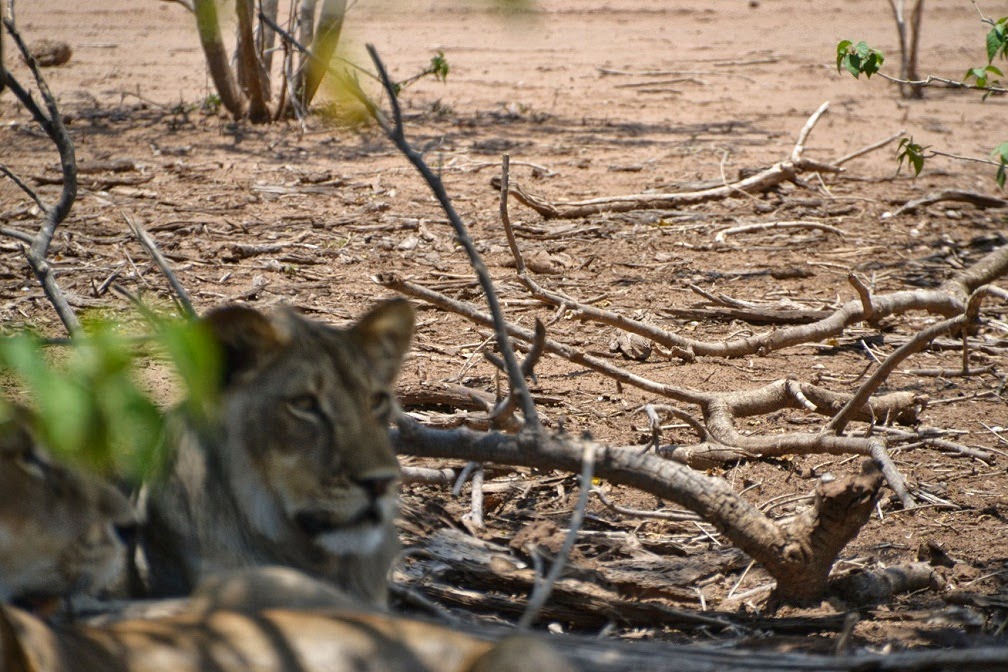
Less than five meters from JJ, two lionesses and a young male rose from the vegetation where they were sleeping before we attempted to clear the sickle bush.

JJ levitated back to the vehicle in a single bound, and the lesson was learnt: Look before you leap!”


Environmental Calendar - March 2014

World Wildlife Day, 3 March 2014

The first ever World Wildlife Day is celebrated on Monday 3 March.
 

This day was specifically singled out by the United Nations General Assembly as it was the anniversary of the adoption of the Convention on International Trade in Endangered Species of Wild Fauna and Flora (CITES). This international treaty aims to ensure global trade does not threaten the survival of listed species.


John E. Scanlon, the secretary-general of CITES, had this message about the importance of this day: “The 3rd of March is the opportunity for all of us - no matter who we are or where we are - to celebrate the beauty and variety of the millions of plants and animals that we share our planet with.

While we cherish wildlife in its own right we should not forget that it also contributes to our personal well-being - from food to medicine – from culture to recreation.

But today our wildlife is suffering from habitat loss as well as a grave threat from illegal trade, which is worth many billions of dollars every year. This illegal trade is now threatening the survival of some of our most charismatic species, as well as some plants and animals you may never have heard of.
 

So as we are celebrating wildlife let’s do whatever we can - as citizens and as consumers - to bring this illegal trade to an end. Let’s work for a future where people and wildlife coexist in harmony.

By working together we can do this - and in doing so secure the future for wild plants and animals as well as for ourselves.

On this special day let's reconnect with our planet's wild side - let's go wild for wildlife!”


Green Spotlight:  Endangered Wildlife Trust

The Endangered Wildlife Trust (EWT), Wilderness Foundation and KwaZulu-Natal Ezemvelo have joined forces to embrace communities living on the outskirts and within the grounds of national parks and game reserves, as partners in the fight to save rhino.


The organisations have developed an educational DVD aimed at communities living and working in and around reserves which contain rhino entitled ‘Uma uhambo lwabo luphela nolwethu lophela’ (Should their journey end so will ours), which focuses on highlighting the direct link between community livelihoods and saving rhinos.

“There is no single solution to addressing illegal wildlife trade, which is an increasing global phenomenon, estimated to now be the third largest illegal industry worldwide after drugs and human trafficking. Wildlife trade often has its roots firmly established in organised and trans-boundary crimes. For this reason the EWT’s Rhino Project is implementing interventions at several stages in the poaching and wildlife trade chain and this DVD addresses one of the first links in that chain as it focusses directly on the role of communities who are often exploited by wildlife crime syndicates,” said Kirsty Brebner, the EWT’s Rhino Project Manager.

The DVD was researched, directed and edited by Samson Phakathi, Senior Field Officer for the EWT and Mandla Buthelezi of the Wilderness Leadership School and was filmed in and around Ezemvelo KZN Wildlife parks and reserves.

The DVD, partly sponsored by the Rhinose Foundation, was produced by African Renaissance Productions and is available in Zulu with or without English subtitles. The DVD highlights the links between wildlife and community livelihoods as well as the cultural and environmental importance of rhino. It has been designed as a tool to be used in community engagements and outreach projects. The battle against rhino poaching and wildlife crime is far from over and we urge you to keep demonstrating your support for the work of the EWT and other reputable NGOs and organisations.

For further information about the DVD and to secure a copy please contact Kirsty Brebner at kirstyb@ewt.org.za.

February 7, 2014

THROUGH THE BUSH TELEGRAPH: Look before you leap – Selati


If there’s one guarantee in nature, it is that the unexpected is sure to happen, as sure as the sun rises in the east and sets in the west. As this update from Christine Jutz from our wilderness camp in the Selati Game Reserve clearly indicates:

“Instructor Mark Gunn would always tell us that part of guiding and conservation is to clear the road of any overhanging branches, as this would prevent the creation of new roads and so disturbing the natural environment. So every once in a while, he would stop the vehicle and say “Tracker, take the panga and help me to get this branch.”

Then of course the following happened on one of the drives… Our ‘tracker’, fellow student JJ, jumped off his seat, grabbed the panga, and as he was walking to the sickle bush, everybody on the vehicle started yelling “Lion, lion!”

Less than five meters from JJ, two lionesses and a young male rose from the vegetation where they were sleeping before we attempted to clear the sickle bush.


JJ levitated back to the vehicle in a single bound, and the lesson was learnt: Look before you leap!”

NOTE: The picture is not of the lions in this story, it is however of the Selati lions. 

October 17, 2013

28 DAY SAFARI GUIDE COURSE: PUT THIS ONE IN YOUR CHRISTMAS STOCKING – MASHATU, KARONGWE, SELATI


So many things to do, so little time… Therefore the EcoTraining 28 Day Safari Guide course from 26 November-23 December is just the right way to make 2013 a year to remember.

From three of our wilderness camps – Mashatu (Botswana), Karongwe, Selati (South Africa) – you will experience an unrivalled bush holiday whilst learning about the environment in a unique and exciting way. It is for those that are passionate about nature, who would like a more in-depth experience and understanding of it. The knowledge you gain on this course will take your safaris and bush holidays to the next level and give them a whole new meaning.

You will also get to immerse yourself in the unique animal and plant life of three different reserves on this specific course – each with its own sense of allure.

And experiences like this, described by a course participant, won’t be out of the ordinary…


“We were about to sit down for dinner when we heard a lion roaring just outside of camp. We hopped into the Land Rover… It was a lone lioness and she called several more times while walking past the camp, attracting the attention of several spotted hyenas. 

Continuing a feud as old as time, three hyenas came looking for her and found her, while five more circled around behind.  She held her ground until the hyenas attacked, and then she let out a ferocious snarl and swiped at one of them before running for the nearest nyala tree. The hyenas followed in pursuit and stalked around the tree. 

The next morning, tracks showed that two male lions eventually joined the fray, probably dispersing the hyenas, allowing the lioness to come down.”

Here’s a diary snippet from another fortunate participant to whet the appetite…


“Lions were spotted just across camp! We followed the tracks and found five lions after one hour of walking. What a great experience! The cubs were playing around but at the same time also very alert. The female started growling at us, swishing her tail. Eventually they all started growling at us. We had an awesome sighting and had to back out because of the alertness, growls and warning signs. We continued the walk away from them. And then, to top it all, we also saw a bat eared fox! Not to mention the many kudu and impala in the riverbed and the vultures in the sky. It was a lovely walk in the cool breeze.”

And if that wasn’t enough…

The sun was setting rapidly, and as darkness descended the radio call came in: ‘There are lions in camp! They are close to Tent 13!’ We raced off back to camp after I instructed all the guys in camp to gather in the main lecture area or to stay in their tents. As we approached the camp, we decided to go and see exactly where the lions were, and how many there were so that we could make a judgement call as to what the next plan of action would be.


As we came around the corner, there they were; 3 of them, sprawled out in the middle of the pathway leading from the instructor’s tent to tent 13. It was a lioness and her sub-adult nephew and niece. They were quite relaxed before the young male got up and walked to tent 12. As he disappeared out of view we kept on looking at the older lioness who was very relaxed with in our company.”

So come on, what are you waiting for? Get in touch and book your place – 26 November-23 December Mashatu, Karongwe, Selati – Email enquiries@ecotraining.co.za.


(Thank you Agnes van der Heijde for the photos!)

August 27, 2013

ECOTRAINING: PASSIONATE ABOUT CONSERVATION

From humble beginnings way back in 1993, when a handful of passionate individuals saw the opportunity to provide the tourism industry with qualified nature-guides, to the leader in this field today.

This is the story of EcoTraining.

For the past 20 years, thousands of people with a deep love for nature, an appreciation of all things wild and wonderful and a passion for conservation, have attended our courses in wilderness camps across Africa.  And armed with this knowledge, they have gone on to make a difference and spread the message of reconnecting with nature in a meaningful way.

Michael Clark, who trained with EcoTraining more than 10 years ago, is currently in Nepal, training up young Nepali naturalists. 

Says Michael:

“The variety of subjects is incredibly diverse and comprehensive, and the practical element provides you with experiences that are hard to put into words. Anyone who is serious about a career in eco-tourism or simply wants a sabbatical from work, the experiences you can have on a course can lead to a whole new way of life, and provide you with memories to truly cherish.”

Like Marc Lindsay Rea, who says he’s now living the dream, thanks in part to EcoTraining who has put him in a very privilege position indeed, as a fully qualified field guide leading people into the wilderness and onto memory-making adventures.


“I have such a thirst for acquiring knowledge about wildlife and nature from around the world and I am lucky to have the privilege to guide guests through these exciting places. I thank and appreciate everybody and every company that has put in many long hours to help get me to the position I am at now. Thank you!”

Yes, we are essentially a field guide training company, training guides for the industry. But with shorter courses and excursions on birding, tracking, photography and bush survival, and from anything between four and 28 days, we are also catering to the tourist with a conscience.

Today’s tourist is a thinking traveler who wants to have fun while gaining a better understanding of the natural world. And this is where a company like EcoTraining is stepping in and creating an experience with a difference.


Like Richard Schmid from Switzerland who was born in Mombasa and spent the first seven years of his life in Kenya. He went back to the country of his birth to take part in a 28 Day Field Guide course in the Lewa Wildlife Conservancy.

For Richard there’s no other way to travel.

“I travel like this all the time, to go out and actually do something, on a course like this to be directly and actively involved in something. I now know so much more, my base of knowledge has broadened considerably and I’m not regretting it for one moment. We have an ecological responsibility and I think people are becoming more and more aware of it all the time.”

Through the years the EcoTraining qualification have become the trusted nature-guide training standard in the industry, giving people from all walks of life and from all over the globe the opportunity to become one with nature. We have trained all across the African continent and also in many other parts of the world.


And our wilderness camps in South Africa (Makuleke, Selati, Karongwe), Botswana (Mashatu) and Kenya (Lewa), is where it is all happening. It’s in these simple unfenced bush camps in the middle of these great wilderness areas participants truly get to experience what it is like to live in wild places. Under the guidance of experienced instructors, countless hours are spend walking or driving in the bush, and an understanding of our place in the natural world is cultivated.

Africa indeed just has its way with people. The continent’s wild and wonderful places lure people from all over the globe, to come and explore and then to return wherever they are from with vivid memories to last a life time.

You will get all this, and so much more, on an EcoTraining course.


But don’t just take our word for it. From the horse’s mouth, or in this case, Nick Baker, a former professional field guide course participant:

The beauty of this course is the extended time one spends out there, nothing is rushed and every day one learns something new, building a quite awesome knowledge base… I miss it today and will miss it every day that I am not there. The experience is total and is built of a complicated set of components, animals, birds, trees, plants, insects, soil, water, weather, stars, sights, sounds, smells, magic…  The bush does funny things to your head. It has got inside mine…”


Candice Wagener McGuire echoes these sentiments:


I guide because I like sharing my passion with those around me, I love seeing how the bush inspires every single being. My day is made when I see how people brighten up when they spend their holiday in the bush, how the smallest things put a smile on their faces. When I guide, I feel like I’m making a small difference to keep Africa alive in everyone’s hearts.”

August 8, 2013

THE TIME OF YOUR LIFE – ECOTRAINING PROFESSIONAL FIELD GUIDE COURSE – BOOK NOW FOR SEPTEMBER!


Yearning to break away and experience something truly life-changing? Want to understand the intricate inner-workings of nature and how all is connected? Have time?

Then book your place on EcoTraining’s professional field guide course and walk away with a deeper understanding of Africa’s web of life, a greater appreciation for conservation and an altogether different outlook on life.

The next course, starting in September, is filling up quickly and for a limited period EcoTraining will offer this course at a special rate (terms and conditions apply).

To join in the adventure of a life time and book one of those last remaining places, send an email to enquiries@ecotraining.co.za.

This course is not only for people wishing to enter the industry as field guides, but for anyone who wants to increase their knowledge of the African bush. 

For almost one year you will be exposed to diverse ecological and geological terrains, landscapes, wildlife species and so much more at our wilderness camps in places like Makuleke, Karongwe, Selati (South Africa) and Mashatu (Botswana).


After six months of theoretical and practical training, the lodge placement period will follow where interaction with guests from all over the world will certainly give you more memories to bank.  At the end of the year you will therefore not only be qualified, but will also have gained practical experience in the lodge industry. 

But don’t just take our word for it. From the horse’s mouth, or in this case, Nick Baker, a former professional field guide course participant:

“I was privileged to work in the Wilderness Pafuri camp in the Kruger National Park. Most of the employees are from the local Makuleke tribe and in many ways it felt like working in an extension of the local community with all the complexity, disasters, fun and frolics that that involved. It was an eye opener to say the least to be dropped head first into this, straight in to guiding paying guests, negotiating the workings of the lodge and above all trying to contribute something useful to the mix. My time there was awesome, not always easy but overall awesome.”

Candice Wagener McGuire echoes these sentiments:


“It’s not because life is like a holiday every day, even with the long shifts in tow. I guide because I like sharing my passion with those around me, I love seeing how the bush inspires every single being. My day is made when I see how people brighten up when they spend their holiday in the bush, how the smallest things put a smile on their faces. When I guide, I feel like I’m making a small difference to keep Africa alive in everyone’s hearts.”


These first-hand accounts will now most certainly make you send that email to enquiries@ecotraining.co.za to book a place on the next year course in September. You won’t regret it!

And in case you were still wondering, a final word from Nick...


“The beauty of this course is the extended time one spends out there, nothing is rushed and every day one learns something new, building a quite awesome knowledge base… I miss it today and will miss it every day that I am not there. The experience is total and is built of a complicated set of components, animals, birds, trees, plants, insects, soil, water, weather, stars, sights, sounds, smells, magic…  The bush does funny things to your head. It has got inside mine…” 

March 14, 2013

TAKING HANDS – CONSERVATION EDUCATION ACROSS THE GLOBE


A model for the Middle East. With some help from Africa. Taking conservation education across borders, a handful of different role players are adhering to the notion that in nature all is connected in some way, shape or form.

For the last three years EcoTraining, a leader in field guide training for 20 years in Africa, the Royal Society for the Conservation of Nature in Jordan and Tetra Tech, a consultancy firm, have been working together to transform the conservation and guiding sectors in Jordan.

An opportunity like this, for conservation bodies and training facilities across the globe to strike up partnerships, recently resulted in the graduation of four young Jordanians after they successfully completed a yearlong professional field guide course at EcoTraining’s wilderness camps across South Africa.

From an extensive internet and social media campaign that attracted hundreds of applicants, Abdullah Abu’Ramman, Osama Alsomadi, Osama Alrabay’ah and Nadia Alalul were in the end the fortunate ones. With the knowledge acquired during the last year, armed with and fully certified under EcoTraining and South Africa’s guide qualification system (FGASA), these four are now task to go back to Jordan where they will practice as guides and trainers in their own right. In the process they will not only be transforming the guiding experience in Jordan, but also serve as the foundation for the next generation of highly qualified Jordanian nature guides.

(From left) Tall Osama, Short Osama, Abdullah, Nadia
The next phases of the program will involve the setting up of a training academy. This academy, currently being built in Aljoun about 80km outside of the Jordanian capital, will serve the urgent and vital need for building capacity in the whole of the Middle East to protect and manage its environmental resources in the face of ever increasing development pressure. Here expertise and skills would be developed at vocational level and a resource base for the region would be established.

Upon their graduation, Chris Johnson, the program director for new projects for RSCN and mentor to the foursome, said they feel strongly that nature be one of the drivers of economic opportunities not only in Jordan, but the whole of the Middle East.

“We’ve come to realize that the need for a project of this magnitude is far greater than we initially anticipated. The need for capacity building in Jordan and the whole region has snow-balled and we have just started on the path to grow this into something big and truly meaningful and longstanding.”

Ahmed Hassan, a director from Tetra Tech, said he knew EcoTraining would be the best fit for the project.

“I’ve known EcoTraining from previous visits to South Africa and realized that what we wanted to achieve in the long run, could not start on a better footing than using their method of training as a model. But hard work still remains, it is indeed only step one of a long journey.”

(From left) Short Osama, Tall Osama, Nadia, Anton Lategan, Ahmed Hassan, Chris Johnson, Abdullah

During their yearlong course, the two Osamas, Abdullah and Nadia were exposed to the diverse ecological and geological terrains, landscapes, wildlife species and so much more in places like Makuleke, Karongwe and Selati where EcoTraining has its wilderness camps.  For the first six months, the company’s highly experienced instructors shared and imparted their wealth of knowledge on a variety of subjects – geology, astronomy, ecology, botany, taxonomy, animal behavior and conservation management, to name but a few. Then they got a taste of what life as a field guide really is like with their placement at a lodge.

Apart from being amazed at the amount of knowledge they accumulated in the time since taking those first tentative steps a year ago, Nadia said she is fully aware of the huge responsibility now resting on their shoulders, to transform and help shape the guiding industry in a different part of the world.

Nadia
“We have had the privilege of living in an environment that few people nowadays get to experience, living among wild animals in their natural environment, and being able to study and observe from only a short distance away.

All in all this has been an amazing adventure and I had the time of my life! Make no mistake, it has been grueling and the amount of information that I have absorbed has been enormous but I have learnt so much and everything has been interesting. I can recognize hundreds of bird calls, achieved a track-and-sign level 1, can tell the difference between a black and white rhino by looking at their dung, which way a leopard is moving and whether it’s a female or male by looking at its tracks in the dirt, and I know which tree can ease my pain and which one could kill me.

But most importantly, I have an appreciation and deep respect for all creatures like I have never had before. I wouldn’t have realized all this if it weren’t for those special people we have had the honor and great privilege to meet along the way. The dedication and knowledge of these highly experienced instructors in promoting conservation and helping to educate others on why our environment and everything in it is so important, has made a big impression.”

Tall Osama
‘Tall’ Osama said his dream to travel and explore the world came true when the RSCN awarded him one of the coveted spots in the yearlong professional field guide course with EcoTraining.

“I am not sure if it was normal for a little child of four years old to answer the classical question of what you do you want to be when you grow up with “Emperor” but this was my answer. I couldn’t even pronounce it right but since then, I learned to dream big. And now I am prepared to go back to Jordan and teach this art to others. In the end I would thank my beloved parents, brother and sisters, the RSCN, Chris Johnson and all the people that build up my story with pieces from here and then.”
Short Osama

Every single person that he met in the last year, has marked his life forever, is how ‘Short’ Osama reflected on his time with EcoTraining.

“And I have to also give thanks to every impala. From the very first one that we saw and didn’t even know what it was. We were just amazed by its beauty, taking pictures and posing with it. To the very last one that we took for granted and thought to ourselves it’s just another impala.”

The journey of a thousand miles begins with one small step, and Abdullah may have summed it up best when he said that their lives have now been changed forever, and for the better.

Abdullah

“It has been an amazing year spent with great people with an absolute love and passion for nature and all that happens out in the wild. I can honestly say that I never could have imagined an experience like this. I am now very much looking forward to the rest of the journey and sharing what I have learned.”

September 21, 2012

SAVE OUR RHINOS!


This is certainly one of the most iconic pictures of Africa and its inhabitants - a rhino, etched against the sky with the last rays of the day still lingering, head held high and with its horn prominently on display. 

Tomorrow (Saturday 22 September) is International Rhino Day and EcoTraining has been right in the middle of the fight in trying to save these magnificent beasts from disappearing from the natural landscape. We have added a Rhino Conservation and Research course to our program as we believe education is vital to informing not only discerning nature lovers, but all and sundry that has a respect for all inhabitants of this planet. 

The picture, as described in the intro to this story, is however fast fading into oblivion. A hundred rhinos have been killed in the last two months alone and the figure for 2012 has already crossed the 380+ mark. If the current rate of unabated killing continues, close on 600 rhinoceros would meet their end with the bullet from a poacher's weapon by the time 2012 closes out. This would be up from 448 last year and 333 the year before.

And all this for a horn that is made up of keratin, melanin and calcium and similar to horses' hooves, turtle beaks and cockatoo bills. But to change deep-rooted Eastern and Asian believes that it is a cure for cancer, a remedy against a host of other illnesses and an aphrodisiac, is going to take a lifetime. Put on top of that the international fetching price of anywhere between $40 000 to $65 000 per kilogram for this precious commodity, it almost seems like an insurmountable task. Even more so if museums across the globe are now also having to remove their rhinos from public view after a spate of thefts. There have been 57 thefts and 12 attempted thefts of rhino horn from museums in 15 countries in Europe since the start of 2011.

That is why the tireless efforts of private land and rhino owners, rangers, conservation organisations, the police and military, and the general public is of vital importance to save the species. They are taking up the plight of the rhino to ensure that future generations will still have the opportunity to see these grey beasts as part of the natural landscape.

To ensure the survival of their precious stock, the owners of the Selati Game Reserve in Limpopo, where EcoTraining has one of its wilderness camps, undertook a massive project earlier in the year to send a clear message to potential poachers, "Keep your hands of your rhinos!" A group of one year professional field guide students were on hand to witness first hand and got a taste of conservation at work.


The management of the reserve, in cooperation with the proper veterinary assistance, started dehorning some of Selati's rhino population (black and white). Great care was taken during the whole operation and all the necessary measures were put in place. The animals were handled with the utmost care as a rhino's horn is not fixed to the skull, but almost an extension of the skin.


It is believed that the dehorning, in addition to strengthening the anti-poaching patrols on the ground and from the air as well as various other safeguards, will greatly reduce the temptation to those with weapons and a savage agenda. The re-growth will also be monitored and cut regularly to ensure that the horn mass remains very low.


There may be questions and arguments from some corners about the effectiveness of dehorning as a deterrent to poachers, on how and if it affects the social behavior of the animals and the reaction of tourists upon seeing an 'altered' animal in the wild. Nothing overtly negative or detrimental has yet been recorded on each mooted point though.


The bottom line is, the time for talking is long gone and it is only the dedicated action of concerned conservationists, like the landowners of Selati, that will give South Africa's rhinos a fighting chance.

For more information and dates on the Rhino Conservation and Research course, visit www.ecotraining.co.za or send an email to enquiries@ecotraining.co.za.